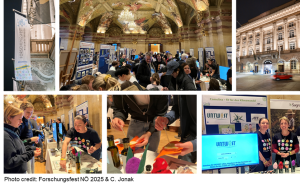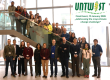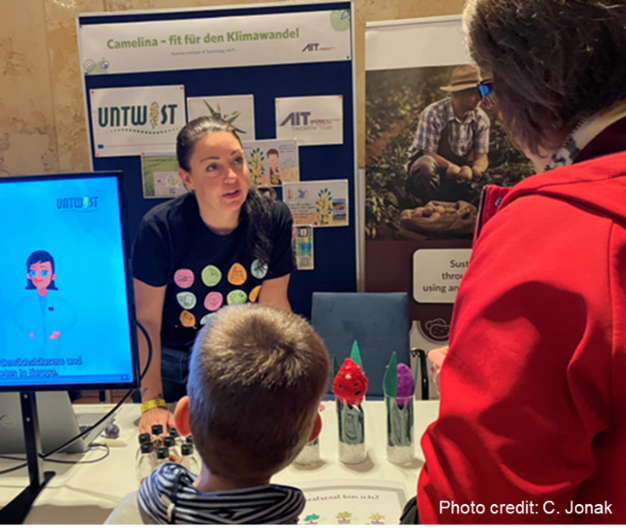
The AIT Austrian Institute of Technology team proudly presented the UNTWIST project at this year’s Research Festival Lower Austria, captivating audiences with an interactive hands-on station that brought plant science to life. The magnificent Palais Niederösterreich was buzzing with energy as more than 1,500 visitors explored the frontiers of science and innovation across over 80 interactive stations.
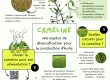
At the UNTWIST booth, curious minds of all ages were invited to dive into some of today’s most pressing research questions: What is stress resilience? How do plants adapt to challenging environmental conditions? How can crops better withstand heat and drought? And what can we learn from camelina, a fascinating and resilient oilseed plant?
Through engaging demonstrations, experiments, and vivid visualizations, the AIT researchers illustrated how specific plant traits contribute to stress resilience—a crucial factor for sustainable agriculture in the face of climate change. Visitors discovered how these insights can be translated into innovative breeding strategies and cultivation practices, ultimately helping to secure stable and robust crop yields despite increasingly unpredictable weather patterns.
A particular highlight for many attendees was the opportunity to learn about and taste camelina oil. The team explained why this ancient crop is regaining attention: not only is camelina highly tolerant to drought and poor soils, but its oil is also rich in omega-3 fatty acids and other valuable nutrients. While some visitors were already familiar with camelina oil, many were pleasantly surprised by its mild, nutty flavor and its impressive health benefits.
Overall, the UNTWIST station sparked lively discussions about the intersection of plant science, climate resilience, and sustainable food production. Visitors left with a deeper appreciation for how cutting-edge research—rooted in understanding nature’s own strategies—can help build a more resilient agricultural future.