UNTWIST research is continuing to generate new scientific insights into the potential of camelina as a sustainable and versatile crop for European agriculture.
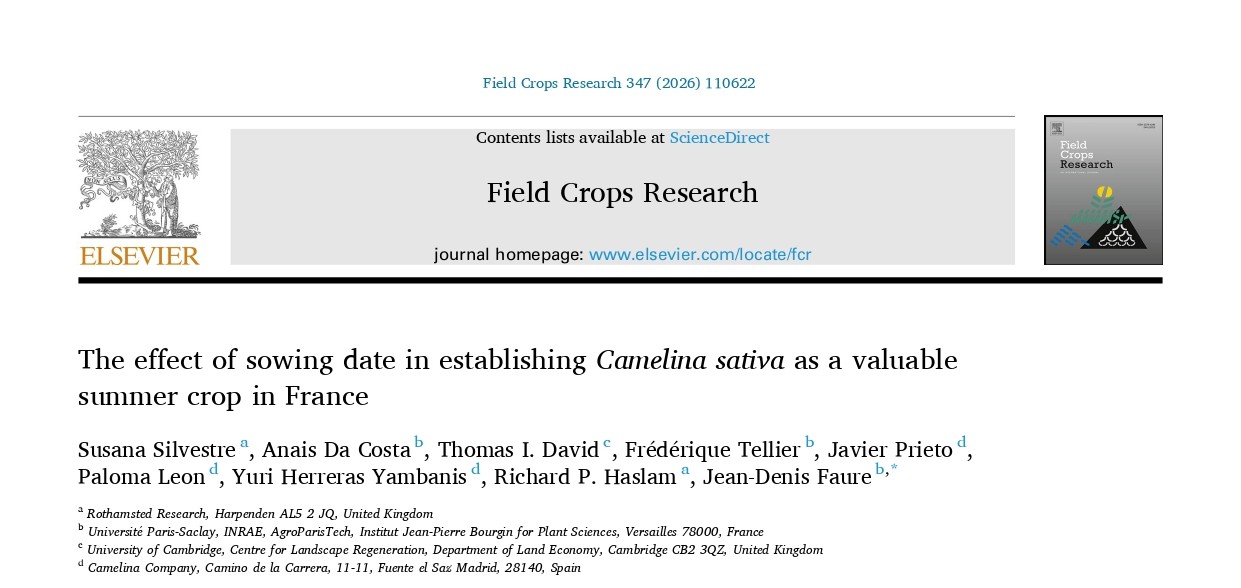
A new publication brings together expertise from UNTWIST partners and researchers from the University of Bologna (UNIBO), Rothamsted Research, INRAE and Camelina Company. The study explores the potential of camelina (Camelina sativa) as a summer intermediate crop in France, offering an opportunity to make more efficient use of agricultural land and resources. Field trials carried out over three consecutive years in Paris assessed different sowing dates, sowing methods and harvest practices, with a focus on seed yield and quality.
The results show that sowing date and seasonal weather conditions have a strong influence on crop yield, seed composition and fatty acid profile. The study also highlights the importance of selecting the right sowing time depending on the intended end use of the crop.
Overall, the findings support the potential of camelina as a short-cycle summer crop that can contribute to more sustainable and efficient agricultural systems. The research also demonstrates the importance of considering agronomic management alongside genetic and environmental factors when evaluating camelina varieties.