The UNTWIST Camelina core collection has been brought together from cultivars growing in diverse climates and geographic locations. It includes 31 different landraces, 20 lines sourced from breeding programmes and 3 commercial cultivars. The core collection incorporates a range of genetics, phenotypes, architecture and adaptive plasticity. This means the core collection is an excellent resource for researchers to understand how Camelina responds to environmental change.
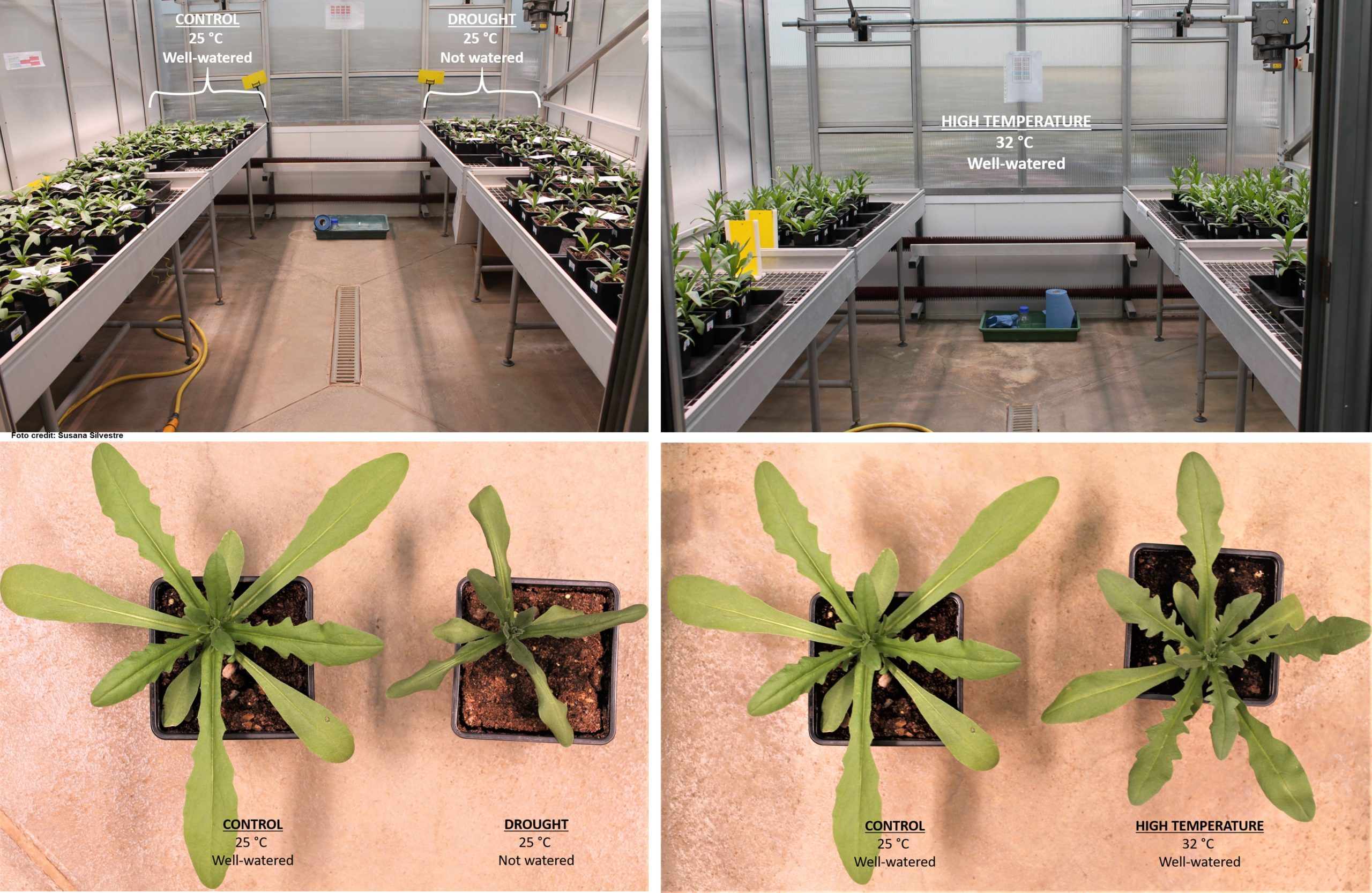
UNTWIST has an integrated programme of experiments to investigate how Camelina adapts and responds to heat and drought (abiotic) stress. In our first experiment, researchers at Rothamsted Research grew the entire core collection in a replicated controlled-environment glasshouse study to understand how the different Camelina cultivars responded to high temperature and drought. Over 1600 individual plants were grown and subjected to control or stress at a key early-stage of development. The experiment lasted for just over three weeks and numerous (>10) developmental and growth parameters e.g. height, leaf development, and stem width were tracked throughout. In addition, measures of plant health like chlorophyll content were monitored regularly.
After eight days of stress leaves from control, heat and droughted plants were sampled and prepared for shipping to UNWTIST partners (INRAe Bordeaux, France; AIT, Austria; and Università di Bologna, Italy). These samples will now undergo a co-ordinated programme of analysis, including metabolic, redox and lipid profiling, alongside stable isotope analysis. These analyses, in combination with the developmental and physiological measurements taken during the experiment, will provide a detailed description of the response of Camelina to environmental change and also show how different genotypes have the capacity to better tolerate challenging growth conditions. The information will be used to select a small group of cultivars or focus lines for detailed life-cycle analysis and modelling throughout the UNTWIST project.
It is clear from the results so far that Camelina can thrive under high temperatures and with a limited supply of water. Camelina has the plasticity to adapt and modify its growth to survive environmental stress. The experiment has further demonstrated that the capacity to respond to abiotic stress varies in the different genotypes. This exciting outcome shows the potential of Camelina to help researchers understand plant plasticity and provide farmers with climate-smart cropping systems.
Susana Silvestre, Emilio Aldorino & Richard Haslam